
Home Health Care
How TeleDoctor Services Are Changing The Way Patients Access Healthcare

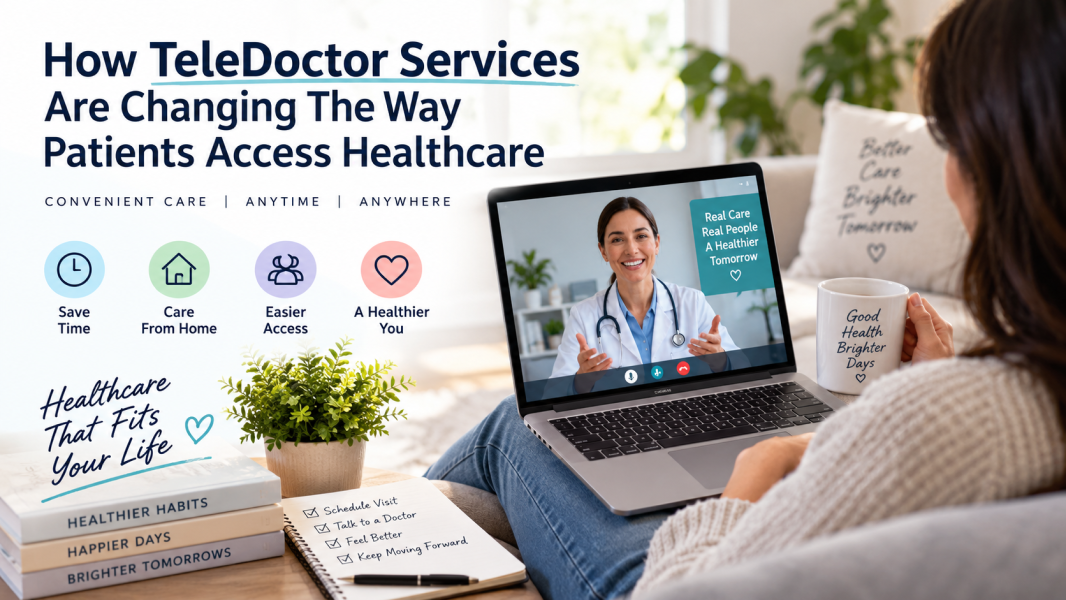
TeleDoctor services make healthcare more convenient by letting patients connect with licensed providers from home. Virtual visits can reduce travel, waiting rooms, and scheduling hassles. They also make routine care, follow-ups, prescription questions, and some urgent concerns easier to manage.
Have you ever put off seeing a doctor because getting an appointment felt like more work than the problem itself? TeleDoctor services are changing that experience by bringing healthcare closer to where patients already are. Instead of driving to a clinic, patients can often speak with a healthcare provider through a phone, tablet, or computer. This simple shift can save time and reduce common barriers to care. For busy families, workers, older adults, and people living far from medical offices, that convenience can make a real difference. 🩺
🏠 Healthcare Without The Waiting Room
Traditional healthcare often requires planning around travel, parking, check-in times, and crowded waiting rooms. Telehealth removes many of these steps for eligible medical concerns. Patients can connect with a provider from a private and convenient location. This can make a medical appointment fit more easily into a busy day. Less time spent traveling can mean more time spent on work, family, or daily responsibilities.
TeleDoctor appointments can be especially useful for routine healthcare needs. A patient may discuss symptoms, ask questions, review treatment progress, or receive medical guidance remotely. Providers can determine whether virtual care is appropriate or whether an in-person examination is needed. That extra flexibility helps patients choose the right level of care. 😊
⏰ Flexible Care For Busy Schedules
Finding an appointment during normal work hours can be difficult. Parents may need to arrange childcare, while employees may struggle to leave work. Students and caregivers can face similar scheduling challenges. TeleDoctor services can offer more flexible appointment options depending on the provider and service. This makes healthcare easier to fit into real life.
| Traditional Care Challenge | How TeleDoctor Can Help |
| Driving to a clinic | Virtual access from a convenient location |
| Long waiting room times | Scheduled online appointments |
| Taking time away from work | Less travel and appointment time |
| Finding local providers | Access to participating telehealth providers |
| Follow-up visits | Convenient remote check-ins |
Convenience does not mean lower-quality care. A virtual visit still involves a healthcare professional evaluating the information available and recommending appropriate next steps. When physical testing is necessary, the provider can explain what should happen next. This creates a more connected healthcare experience rather than simply replacing every office visit.
📱 Care From Your Phone Or Computer
One major advantage of telehealth is accessibility through everyday technology. Many services allow patients to connect using a smartphone, tablet, or computer. Patients may not need specialized medical equipment for common virtual consultations. Depending on the service, communication can happen through secure video, phone calls, or online platforms. This makes digital healthcare approachable for many people.
Patients should still choose a private setting for medical conversations. A reliable internet connection can also make video appointments smoother. Before an appointment, it helps to have medications, symptoms, questions, and relevant health information ready. A few minutes of preparation can make a virtual visit more productive.
🚗 Less Travel, Less Stress
Transportation can become a major barrier to healthcare. Not everyone has a car, lives close to a clinic, or can easily take public transportation. Long drives can also be difficult for people managing busy schedules. TeleDoctor services can remove travel from many types of appointments. That can make routine medical care easier to access.
Remote healthcare may also help patients who live in rural communities. A local shortage of certain healthcare professionals can create longer travel times. Telehealth may connect eligible patients with providers who can serve them remotely. However, availability depends on the provider, state requirements, insurance, and the type of care needed. Telehealth works best when it complements in-person healthcare rather than trying to replace it entirely.
💻 Easier Access To Routine Medical Care
Not every healthcare need requires a physical examination. Some concerns can be discussed effectively through a virtual consultation. Examples may include certain minor illnesses, medication questions, follow-up discussions, and routine health concerns. A provider can review symptoms and decide whether telehealth is suitable. If not, the patient can be directed toward appropriate in-person care.
This flexibility can make patients more proactive about their health. When getting medical advice is easier, people may be less likely to ignore a concern simply because an office visit feels inconvenient. Early communication can help patients understand what steps to take next. It can also prevent uncertainty from lingering when professional guidance is available.
🩺 Better Follow-Up After Treatment
Healthcare does not end when a patient leaves the doctor’s office. Follow-up appointments can be important for checking progress and discussing changes. Yet patients may skip follow-ups because another trip to the clinic feels difficult. TeleDoctor services can make some follow-up visits simpler. Patients can discuss their progress without repeating the entire travel and waiting process.
| Patient Need | Potential TeleDoctor Benefit |
| Treatment follow-up | Convenient remote discussion |
| Medication questions | Easier communication with a provider |
| Symptom updates | Quick review when appropriate |
| Care instructions | Opportunity to ask questions |
| Ongoing monitoring | Regular virtual check-ins when suitable |
A virtual follow-up can also give patients a chance to ask questions they forgot during an earlier visit. This can improve communication between patients and healthcare professionals. Providers can explain next steps and determine whether additional care is necessary. Good communication is one of the most valuable parts of convenient healthcare. Patients should always follow their provider’s instructions and seek in-person care when advised.
👨👩👧 Convenience For Families And Caregivers
Healthcare can become complicated when several family members depend on one caregiver. Coordinating transportation, appointments, work schedules, and childcare takes time. Telehealth can simplify some of these responsibilities. Parents may find it easier to attend an appropriate virtual appointment without taking a child across town. Caregivers may also be able to participate in certain appointments when permitted.
This does not mean every medical situation can be handled remotely. Children, older adults, and patients with complex symptoms may sometimes need hands-on evaluation. Still, virtual care can provide another useful option when the provider determines it is appropriate. Having more than one way to access care can make healthcare feel less overwhelming. ❤️
🔐 Privacy And Secure Digital Healthcare
Patients often wonder whether virtual healthcare is private. Reputable telehealth providers use systems designed to protect patient information and support secure communication. Patients should use the provider’s official platform rather than sharing medical information through random websites or unsecured channels. It is also wise to attend appointments from a private location whenever possible.
Patients should check how a telehealth service handles personal information before using it. They can also ask providers questions about privacy and communication methods. Trust matters just as much online as it does inside a medical office. Choosing an established healthcare service can help patients feel more comfortable discussing personal concerns.
💰 Can TeleDoctor Care Save Patients Money?
Telehealth may reduce certain indirect healthcare costs, although actual costs vary. Patients can potentially spend less on transportation, parking, and time away from work. Insurance coverage and copays also depend on the plan, provider, service, and location. Some virtual appointments may have different pricing from in-person visits. Patients should confirm costs before scheduling when possible.
| Cost Or Time Factor | In-Person Visit | TeleDoctor Visit |
| Transportation | Usually required | Often avoided |
| Parking | May apply | None for virtual care |
| Travel time | Required | Usually reduced |
| Waiting room | Possible | Usually avoided |
| Insurance coverage | Varies | Varies |
The biggest savings may sometimes be measured in time rather than dollars. A shorter healthcare journey can reduce disruption to work and family responsibilities. That benefit can be meaningful for people who cannot easily take several hours away from their normal routine. Still, telehealth should be selected based on medical suitability, not cost alone. Patients should never delay necessary emergency or in-person medical care to save time.
🌎 Making Healthcare More Accessible
Healthcare convenience is closely connected to accessibility. TeleDoctor services can help people who have difficulty reaching traditional medical offices. They may provide another option for patients dealing with transportation, distance, scheduling, or mobility challenges. Digital healthcare can also make communication easier for people who prefer online services. More access points can create a smoother patient experience.
However, access is not identical for everyone. Reliable internet, smartphones, digital skills, language services, insurance coverage, and provider availability can affect someone’s ability to use telehealth. Healthcare providers must consider these barriers when designing patient-friendly services. The strongest telehealth models offer clear instructions and simple technology. This helps patients spend less time figuring out the platform and more time focusing on their health.
⚖️ When TeleDoctor Services Are The Right Choice
Telehealth is useful, but it is not appropriate for every medical problem. A healthcare provider can determine whether a patient’s concern can be safely evaluated remotely. Physical examinations, laboratory tests, imaging, procedures, or emergency treatment may require an in-person visit. Knowing when virtual care is appropriate is just as important as having access to it.
A simple approach can help patients decide what to do:
- Consider the concern. Is it routine, non-emergency, or suitable for discussion?
- Check telehealth availability. See whether the provider offers virtual appointments.
- Prepare your information. Have symptoms, medications, and questions ready.
- Follow professional guidance. Attend an in-person visit if the provider recommends one.
- Seek emergency help when needed. Serious or life-threatening symptoms require immediate care.
🚀 The Future Of Patient-Centered Healthcare
TeleDoctor services are part of a larger shift toward patient-centered healthcare. Patients increasingly expect healthcare to be convenient, accessible, and easy to navigate. Virtual appointments can support that expectation by giving people another way to communicate with healthcare professionals. Technology cannot solve every healthcare challenge, but it can remove unnecessary friction from many routine interactions.
The future will likely involve a combination of virtual and in-person care. Patients may use telehealth for appropriate consultations while visiting clinics for services that require hands-on evaluation. This hybrid approach can give people more flexibility without losing the value of traditional medical care. The goal is not healthcare with fewer doctors or fewer clinics. It is healthcare that fits patients’ lives better. 🌟
❓ Frequently Asked Questions
Can TeleDoctor Services Replace A Doctor Visit?
Not always. Some health concerns require a physical examination, testing, or procedures that cannot be completed remotely. A telehealth provider can determine whether virtual care is appropriate.
Are TeleDoctor Appointments Safe And Private?
Reputable telehealth services use systems designed to protect patient information. Patients should use official platforms and choose a private place for their appointment. Ask the provider about privacy practices if you have concerns.
What Can I Discuss During Telehealth?
Patients can discuss many appropriate routine healthcare concerns with a provider. These may include certain symptoms, medication questions, follow-ups, and general health concerns. The provider will decide whether additional in-person care is needed.
Is TeleDoctor Care Covered By Insurance?
Coverage depends on your insurance plan, provider, location, and type of appointment. Some virtual services may have copays or other costs. Always confirm pricing and coverage before the appointment when possible.
How Do I Prepare For A TeleDoctor Visit?
Write down your symptoms, medications, questions, and relevant medical information beforehand. Find a quiet and private place with a reliable internet connection. Keep any information requested by the provider nearby.
Conclusion: Healthcare That Fits Your Life 🩺
TeleDoctor services are making healthcare more convenient by reducing unnecessary travel, simplifying scheduling, and giving patients another way to connect with healthcare professionals. They can be especially helpful for routine concerns, follow-ups, medication discussions, and other appropriate virtual services. Patients can often save valuable time while staying connected with their care team.
At the same time, telehealth is not a replacement for every in-person medical visit. Some conditions require physical examinations, testing, procedures, or urgent treatment. The best approach combines technology with professional medical judgment. When used appropriately, TeleDoctor services can make healthcare more accessible, flexible, and patient-friendly—one virtual visit at a time.

How TeleDoctor Services Are Changing The Way Patients Access Healthcare

Does Creatine Show Up On A Drug Test? Clear Truth

How A Bionic Finger Neck Shoulder Massager Helps Relieve Daily Muscle Tension

Smart Hand Massager Vs Traditional Massage: Fast Relief Wins

Drip Nutrients Guide: Powerful Benefits For Plants
How TeleDoctor Services Are Changing The Way Patients Access Healthcare
-
 Healthcare Systems6 years ago
Different Types of Healthcare Systems
-

 Fitness6 years ago
Pilates Reformer Compared to the Tower: Which Should You Choose?
-
 Healthy Living8 years ago
14 Coffee Substitutes That Will Help Keep You Awake & Energized
-
Healthcare Systems5 years ago
How Administrative Tasks Adversely Affect Physicians And Patients